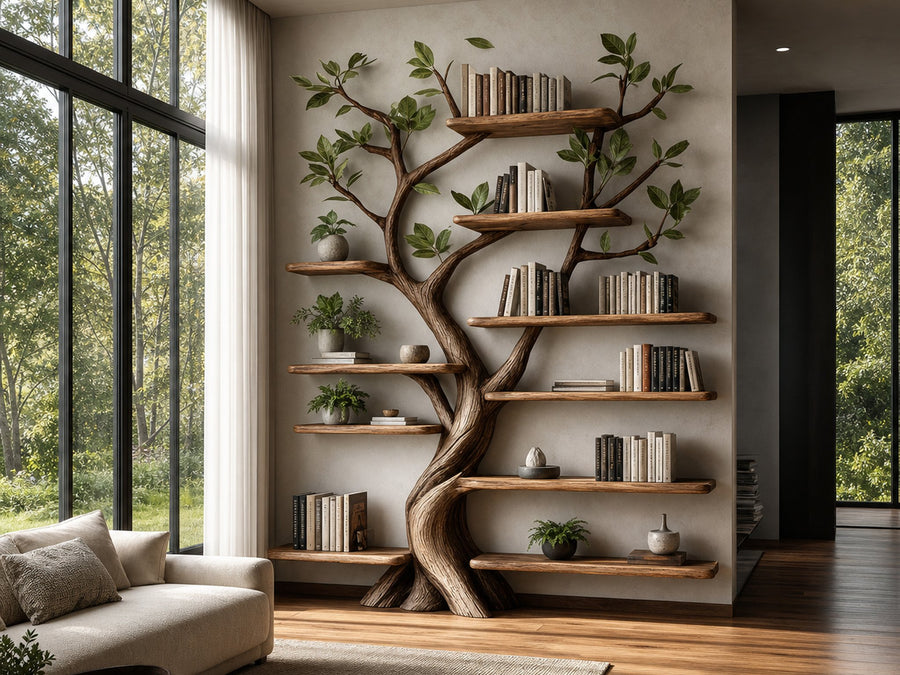
A piece can be useful and still give you a reason to stop and look. The shape of a bench, the space around a sculptural holder or the direction of a table's grain can make an ordinary routine feel more personal. That is a design intention, not a promise about anyone's emotions.
Useful objects belong in the story of art
The Smithsonian classifies George Nakashima's Conoid Bench as furniture and decorative arts. Its natural free edge shows how a tree's shape can participate in a finished design. This historical example helps explain a way of looking at furniture; it does not imply a connection between that artist and Timber Vintique. Smithsonian: Conoid Bench.
When selecting your piece, compare its outline from the doorway, the spaces around its legs or supports, and how the wood sits beside nearby materials. A quiet room may need one strong shape. A busy room may benefit from simpler proportions.
Start a gift with an occasion
A museum record for Nakashima's Minguren II Coffee Table names a gift made in memory of sharing tea with him. It is one documented example of an object carrying a personal memory, not a testimonial about our products. Smithsonian: Minguren II Coffee Table.
For your own gift, write down the occasion, the recipient's daily ritual and the space available. A wine holder might suit a dinner tradition; a small display piece might mark a new home. Confirm fit, compatibility and the order timeline before deciding.
Personal design gives you something to choose
Jonathan Chapman's Emotionally Durable Design explores relationships between people and things. Its design framework supports a useful question: what would make this object worth keeping to its owner? It does not prove that personalization guarantees physical longevity. Publisher's book overview.
Discuss size, color, material and design around that person's space. Make the brief specific enough to carry your meaning without asking the product to promise a feeling.