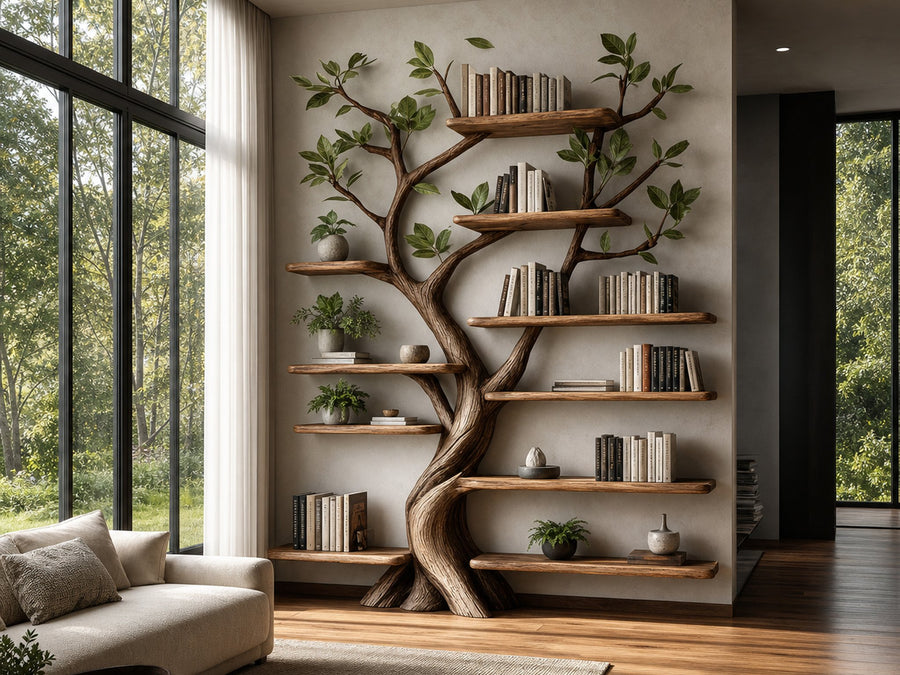
A custom piece starts with the life around it: the chair that needs to slide underneath, the doorway you cross every morning, the corner that a standard size leaves unfinished. A useful brief turns those details into decisions the workshop can review.
Send the room, not just the product size
Measure the intended footprint, nearby doors and the delivery route. Add photographs from two angles and describe what the piece will hold or how it will be used. Mark the proposed outline with removable tape or cardboard, then walk through your usual routine. Include the measurements you took and their units.
Describe the conditions
Wood exchanges moisture with surrounding air, so a heated room, splash zone and covered porch are different briefs. This is a material consideration, not evidence that your finished piece will fail or a promise it cannot move. USDA: wood and moisture.
Say where the piece will live, whether it faces direct sun or water, and which parts you touch or clean most. Finish selection involves appearance, protection and cleaning; a color reference alone leaves those questions open. USDA: finishing wood.
Agree on the specification
We can discuss dimensions, color, material and design around your space. Send a reference image and identify what you like about it: an edge profile, curve, tone or proportion. Keep the must-haves separate from details you are happy to adapt.
Before ordering, confirm the feasible design, quoted price, measurements, finish, intended use and delivery details. Loads or stability need product-specific information: wood properties vary, even within a species. USDA: mechanical properties.
A good brief makes your priorities clear while leaving room for a practical proposal. Start a customization conversation with your room photos, dimensions and intended use.