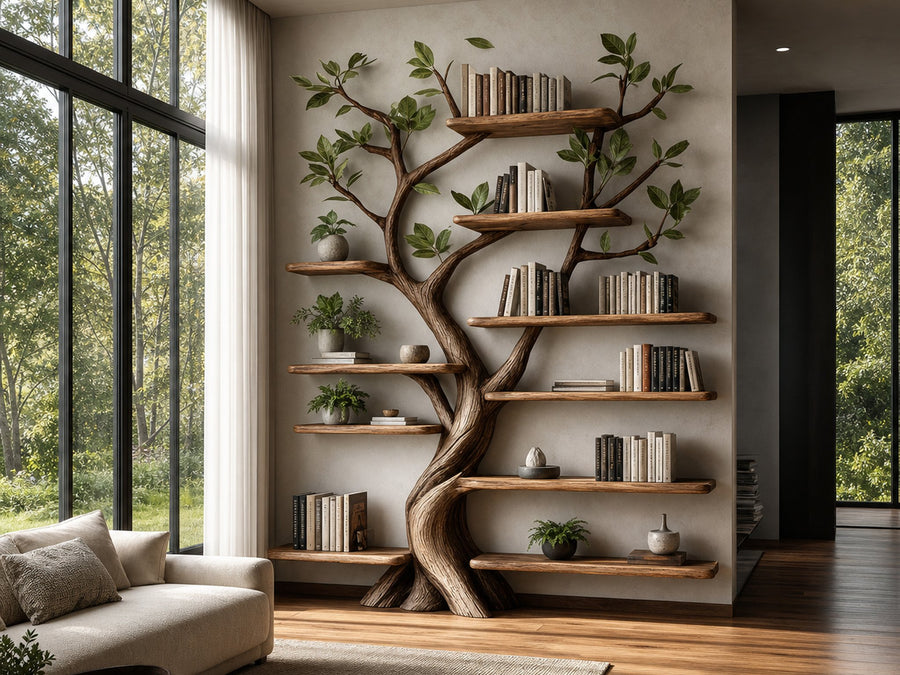
Natural wood has detail at more than one scale. First you notice the outline of a table or shelf. Closer up, you see the lines, changes of tone and small interruptions that make a surface interesting. You can learn to compare those details without pretending a photograph is a laboratory report.
Read the direction before the color
Grain and decorative figure reflect the structure of wood and how it is cut. Two surfaces from the same kind of tree can look different, and the direction of the cut changes what is visible. USDA: wood structure and appearance.
In product images, follow the lines across the surface. Are they straight, sweeping or concentrated around a feature? Look at the whole top and the edge details. Then consider whether you want the grain to lead the room or sit quietly among other materials.
A large slab does not prove a century-old tree
Tree size and age are different measurements. Growth rates depend on species and conditions; ring estimates can require correction for missing or extra rings, and many tropical trees do not produce annual rings. A tabletop photograph cannot establish a tree's age. NIST: measuring tree age.
The honest story is still meaningful: the material grew as part of a living tree. If a specific age, origin or reclaimed history matters to your purchase, ask for documented evidence attached to that material.
Separate appearance from construction
Visible grain does not by itself establish how a piece is built. Wood veneer also has a long decorative history, including marquetry using differently colored woods. A label should describe the construction rather than rely on a photograph to imply it. V&A: historic marquetry.
Ask which parts are natural wood, what construction is specified and how much visual variation to expect. Read our material notes before choosing a surface you will see every day.