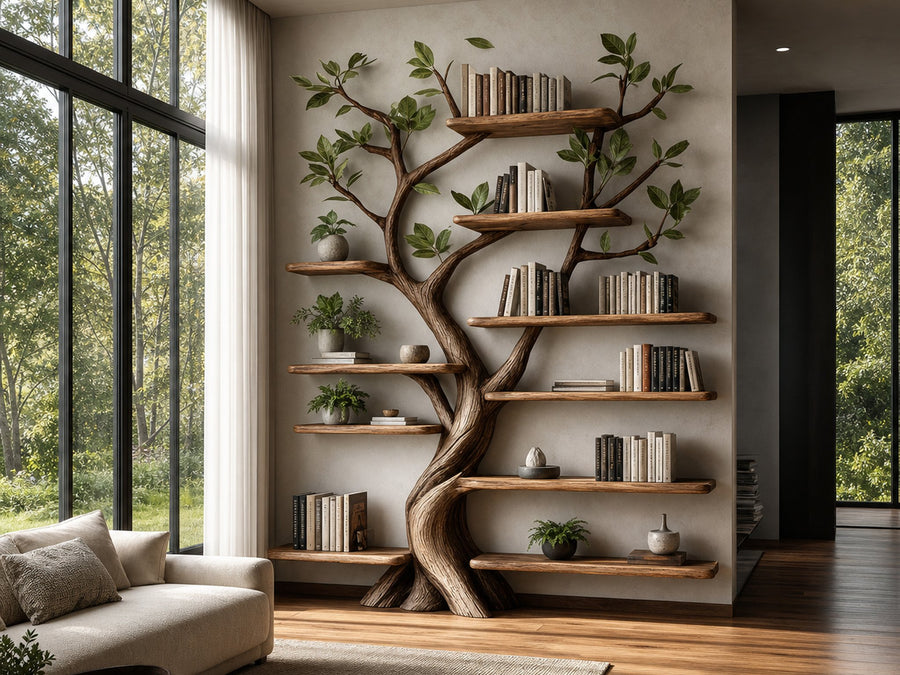
A floating shelf can make a wall feel considered while leaving the floor open. Its clean appearance, however, gives you very little information about what is behind it. Plan the display and the mounting together before choosing a size.
Measure the display you want
Mark the length and depth with paper or removable tape. Check nearby doors, switches and the route past the shelf. Place the objects you intend to display together, then measure the tallest and deepest items. Include books, containers or plants at their intended filled weight when asking about an approved load.
For a corner or irregular wall, send photos from more than one angle and identify how the measurements were taken. A custom request can discuss proportions, color, material and design; the final dimensions still need confirmation.
Ask what supports the shelf
Fastenings contribute to strength and stability, and their design needs to account for wood properties and dimensional changes. A concealed fixing is a design choice, not evidence of a universal capacity. USDA: fastenings.
Confirm the wall construction, mounting method, included hardware and product instructions. Ask whether the intended installation needs a qualified installer. Do not substitute a generic screw or anchor recommendation for the specified setup.
The shelf material also matters, but species-level wood properties do not establish the load rating of a complete shelf-and-wall system. Ask for the product-specific limit and the installation conditions that apply to it. USDA: mechanical properties.
Distinguish wall shelves from freestanding storage
A bookcase standing on the floor has a different installation question: tip-over prevention. CPSC's Anchor It guidance addresses anchoring furniture; it is not a floating-shelf mounting design. CPSC: furniture tip-over prevention.
Send your shelf brief with the wall details, measurements, intended contents and their weights. Those specifics help turn an attractive idea into a reviewed proposal.